READING MUSIC / LESSON 02
Reading the Grand Staff
Welcome to the second lesson on reading music. Today we will learn to read the grand staff. If you are unfamiliar with the five-line staff, please read Lesson 1 first.
Last time we studied the five-line staff. Now let us look at the grand staff: what exactly is it?
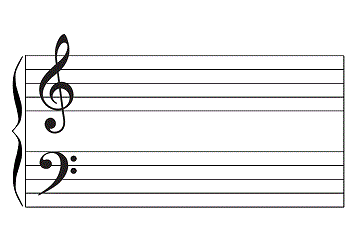
A grand staff consists of two five-line staves connected together, for a total of ten lines. Why do we need two staves instead of one?
Because a single staff does not provide enough room for the instrument’s entire range!
The answer is simple. A single-line melody may fit comfortably on one staff, but wide-ranging instruments such as the piano and harp often need more space. That is why we use the grand staff.
The treble and bass clefs, which we met in Lesson 1, are important here too. Do you remember what each one is best suited for?
1. Used mainly to notate higher pitches.
2. The second line from the bottom represents the G above middle C.
1. Used mainly to notate lower pitches.
2. The second line from the top represents the F below middle C.
If those descriptions are still confusing, revisit Lesson 1. Otherwise, let us continue!
Why use a grand staff? Because we want to notate a wide range of pitches. Combining a treble-clef staff for higher notes and a bass-clef staff for lower notes makes that possible.
Now let us practice reading the grand staff.

The important point is that the two notes shown above represent exactly the same pitch. Check this on a piano keyboard!
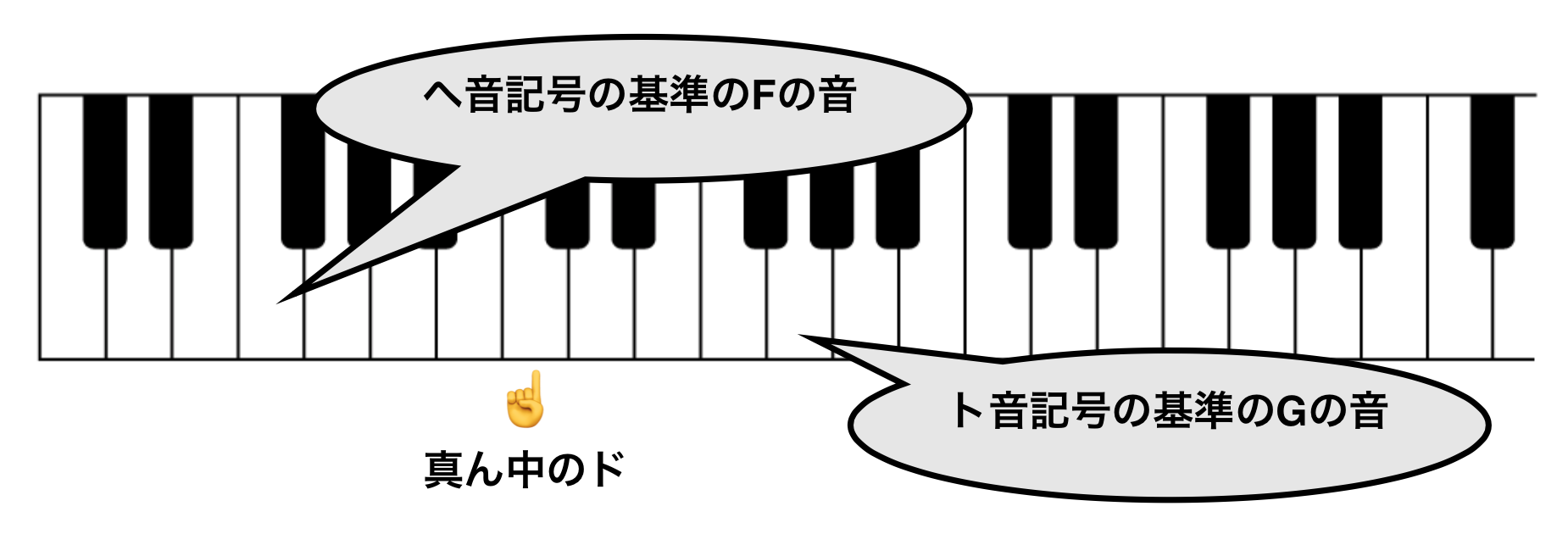
Once you understand this relationship, it becomes much easier to find any pitch on the grand staff.