READING MUSIC / LESSON 23
Metronome Markings and Tempo
In Reading Music, Vol. 23, we explore metronome markings. A tempo indication tells performers how fast a piece should be played. There are several ways to indicate tempo; here we focus on numerical metronome markings. First, what is a metronome?
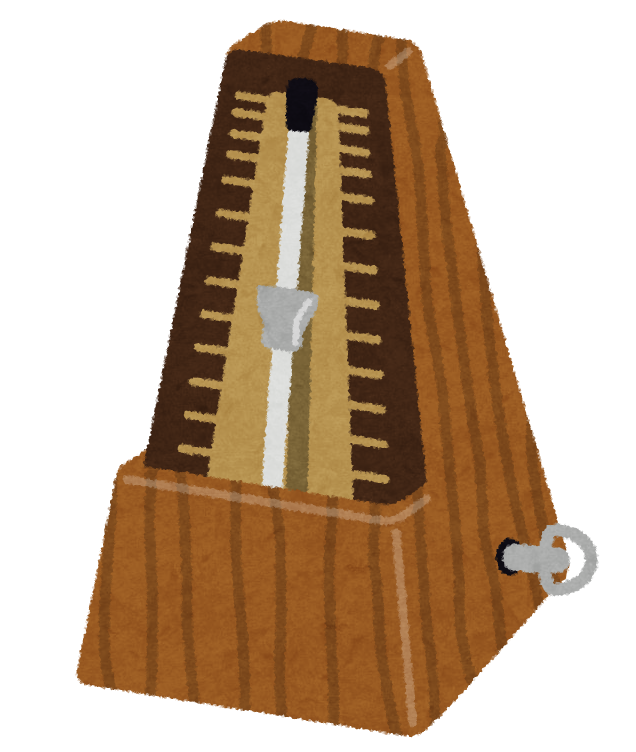
You may have seen a device like this in a music room. Today many musicians use a smartphone app or the metronome built into a digital piano instead. The purpose is the same: it produces a regular click to keep time. A metronome marking tells us how many of those beats occur per minute. We also need to specify which note value each click represents, as shown below.
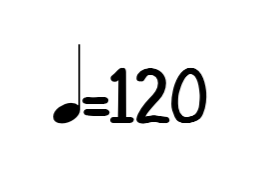
This is what a metronome marking looks like. Let us break down the example.
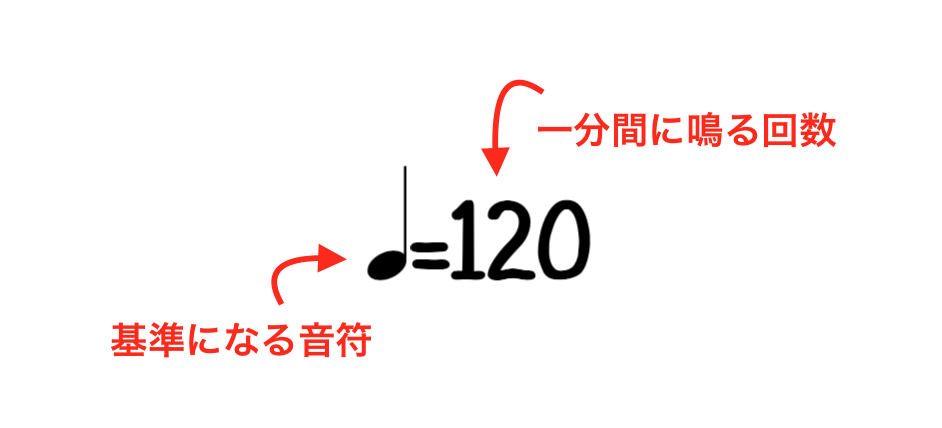
It means that 120 quarter-note beats occur in one minute — in other words, the tempo is quarter note = 120 BPM.
The reference note value should make sense for the piece. For example, an eighth note might be the unit in some 6/8 contexts; a half note may be more practical in very fast music. Always read both the note symbol and the number in the marking.