JAZZ PIANO · COMPLETE GUIDE
10 Jazz Piano Endings | Sheet Music, Chord Progressions & Jam Session Tips
Ending a tune confidently is an essential skill for jazz pianists. Students often ask me about intros and endings, and at jam sessions the pianist may need to lead the whole band into the final chord. The key is having a vocabulary of reliable ideas. I began by memorizing standard patterns before learning to invent endings spontaneously. Here are ten practical endings, illustrated in the key of F.
No.1|Ascending bass and a bluesy finish
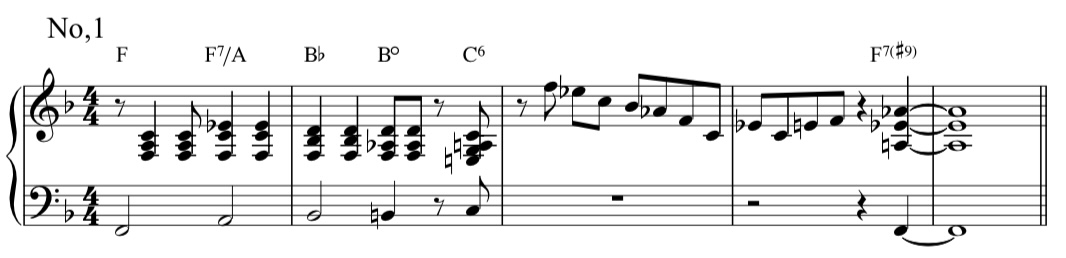
F → F7/A → B♭ → Bdim → C6 → F7(#9)
This familiar ending uses an ascending bass motion through F, F7/A, B♭, Bdim and C6, finishing on F7(#9) in the example. It works especially well in bluesy tunes and rhythm-changes settings. Practice the bass movement and voicings together in every key.
No.2|Chromatically descending chords
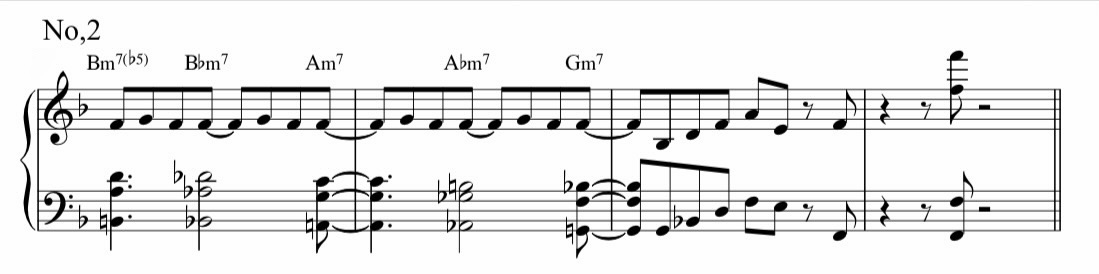
Bm7(♭5) → B♭m7 → Am7 → A♭m7 → Gm7
Start on #IVm7(♭5): Bm7(♭5) in F. The roots then descend chromatically through B♭m7, Am7, A♭m7 and Gm7. This kind of chromatic harmonic motion is familiar from standards such as “Night and Day.” A bassist who recognizes the movement may follow it immediately. Learn it in all 12 keys.
No.3|The Red Garland ending
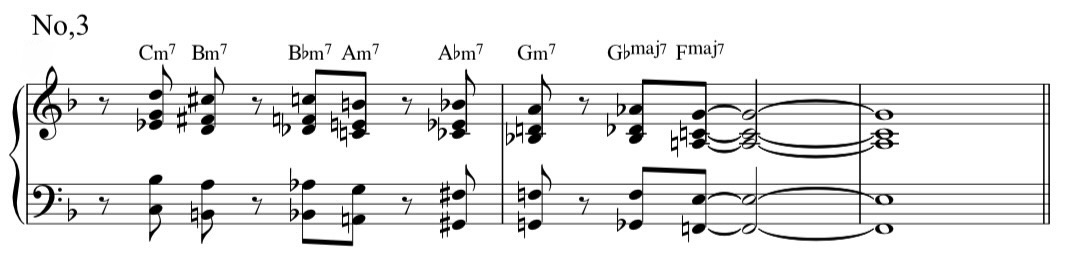
Cm7 → Bm7 → B♭m7 → Am7 → A♭m7 → Gm7 → G♭maj7 → Fmaj7
A classic sound associated with Red Garland: move minor-seventh shapes chromatically down from Cm7, then approach Fmaj7 through G♭maj7. Focus on smooth voice leading and a consistent rhythmic feel.
No.4|A rhythmic ending
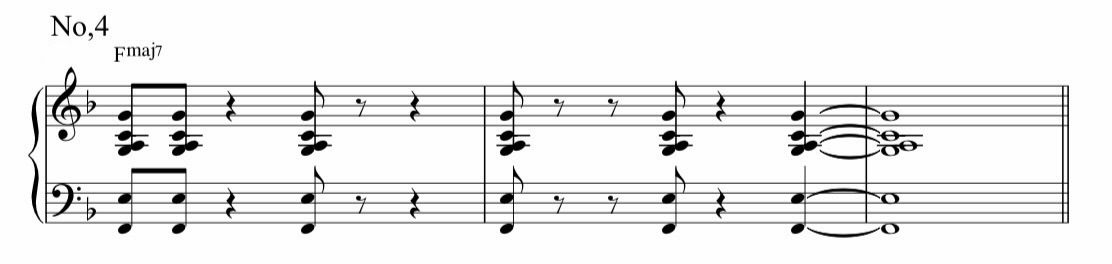
Fmaj7
Here, rhythm matters more than any single voicing. It is useful when you are unexpectedly asked to lead a band into the final chord. Memorize the accents and rests, then adapt the harmony to the tune.
No.5|The Count Basie ending
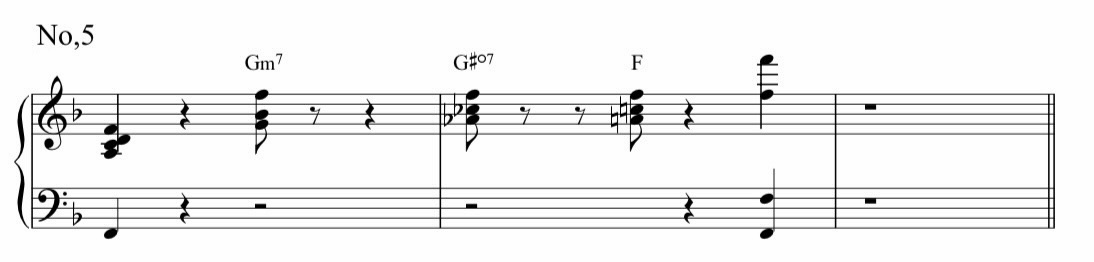
Gm7 → G♯dim7 → F
A compact, punchy Count Basie-style ending. The example moves from Gm7 through G♯dim7 to F. Listen for the chromatic movement of the lower notes and practice it in every key.
No.6|A Wynton Kelly-inspired ending
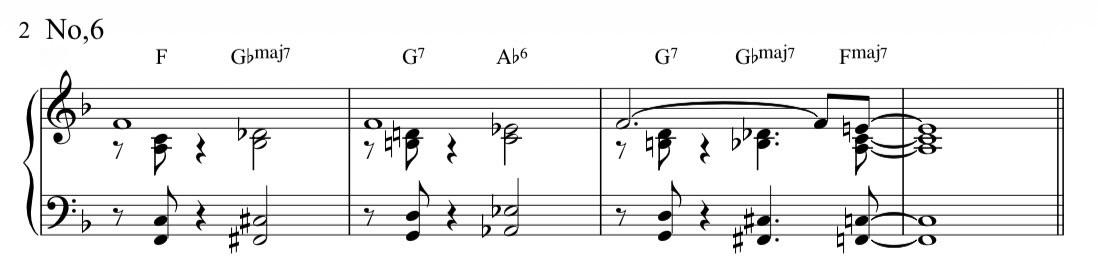
F → G♭maj7 → G7 → A♭6 → G7 → G♭maj7 → Fmaj7
Inspired by Wynton Kelly’s ending on Blue Mitchell’s “I’ll Close My Eyes.” The bass moves chromatically upward from F to A♭, then returns toward F. Hear the rise and fall as one connected gesture.
No.7|A common tone for ballads
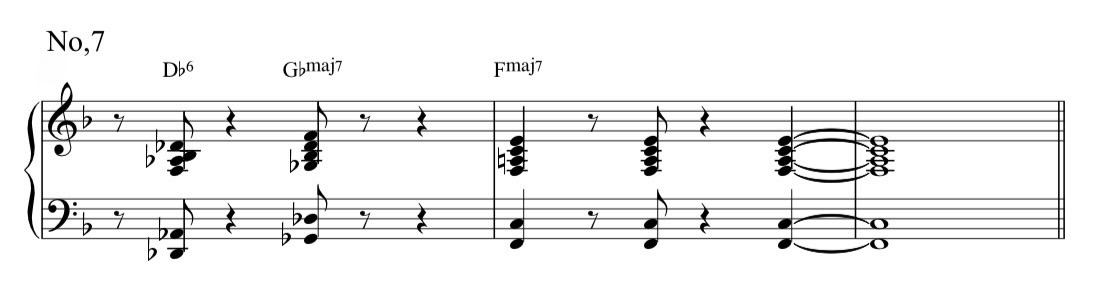
D♭maj7 → G♭maj7 → Fmaj7
The sheet shows D♭maj7 → G♭maj7 → Fmaj7. Hold F as a common tone: it is the third of D♭maj7, the major seventh of G♭maj7, and the root of Fmaj7. Beautiful for a spacious ballad ending or fermata.
No.8|A classic single-note ending
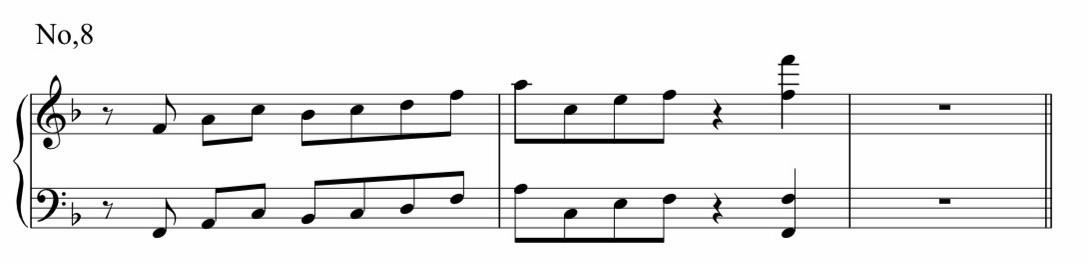
Melodic ending / 単音フレーズ
A recognizable jazz-ending phrase built from a melodic line rather than a succession of chord voicings. Memorize the exact phrase and rhythm first, then transpose it into all 12 keys.
No.9|A classic ending starting on the third
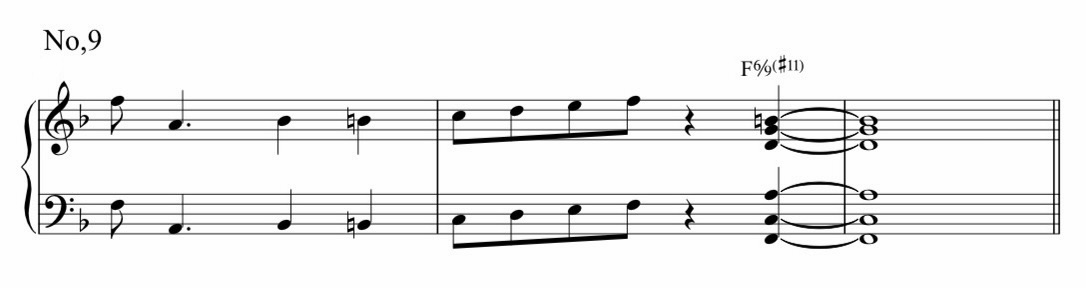
Melodic ending → F6/9(#11)
This familiar jazz phrase begins on scale degree 3—A in the key of F. Move chromatically toward C, then continue using notes of the F major scale toward the tonic F. Pair this with No.8 to expand your options at a jam session. Start by learning the written phrase exactly.
No.10|Descending dominant sevenths in two-beat triplets
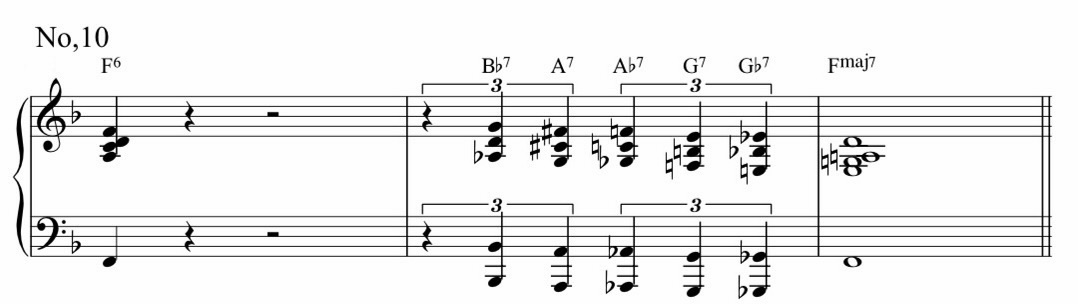
B♭7 → A7 → A♭7 → G7 → G♭7 → Fmaj7
Descend chromatically from IV7 to Imaj7: B♭7 → A7 → A♭7 → G7 → G♭7 → Fmaj7. The two-beat triplet feel is essential, especially the entrance on the middle triplet subdivision. Practice the rhythm as carefully as the chords.
Practice tips
Memorize each written phrase first. Then focus on bass motion, harmonic color and rhythm. Transpose the ideas and try them in real playing situations.