CHORD THEORY / LESSON 04
The Augmented Triad
Lesson 4 covers our final type of triad: the augmented triad. We have already explored three other triads. After this lesson, we will move on to four-note chords, or seventh chords.
If you haven't read the earlier lessons, start with the articles below. Otherwise, continue with the example.
As in previous lessons, let's first look at an augmented triad in standard notation.
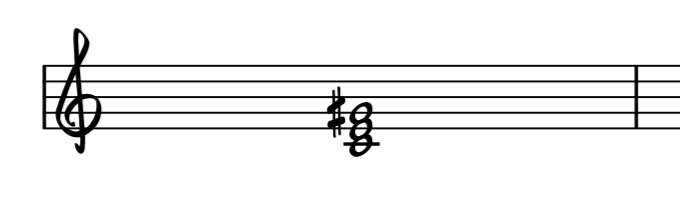
The root here is C, so we call this a C augmented triad.
What is the interval pattern that defines this chord?
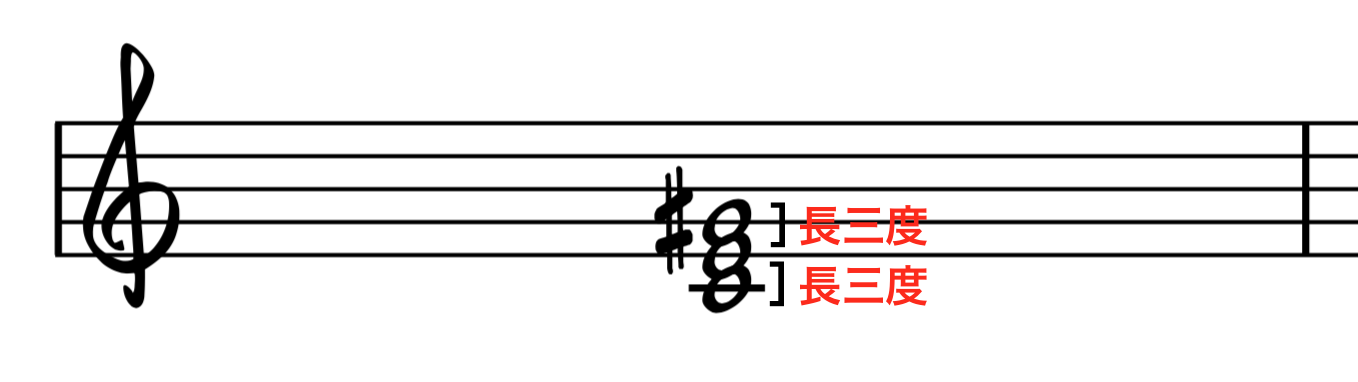
A diminished triad uses two minor thirds. An augmented triad, by contrast, stacks two major thirds. Its sound is quite distinctive, so try playing it and listening carefully. Then let's count the keys as before.
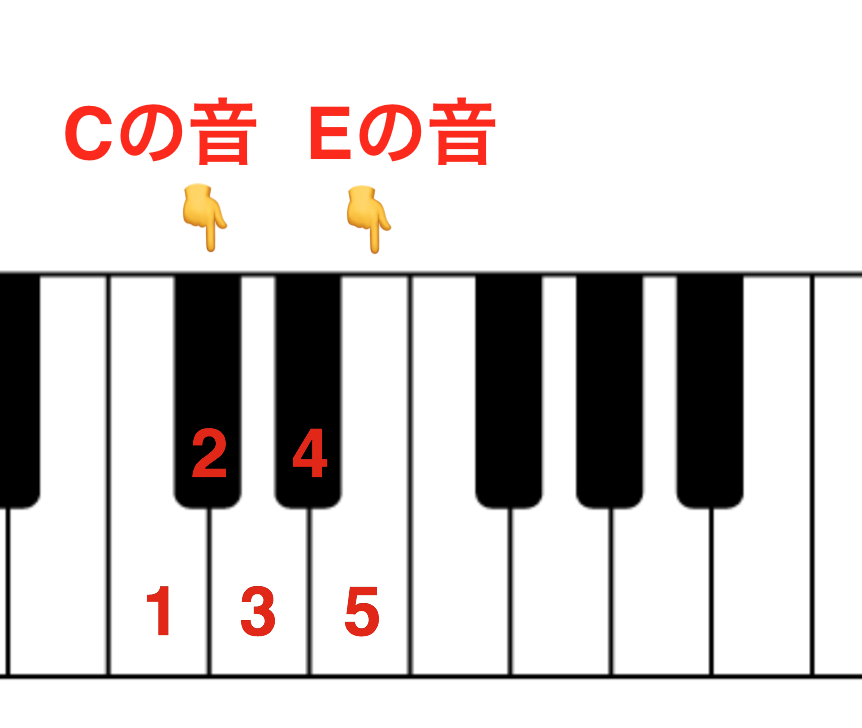
A major third spans five keys when we count black and white keys, including the starting key. Counting upward from C gives us E.
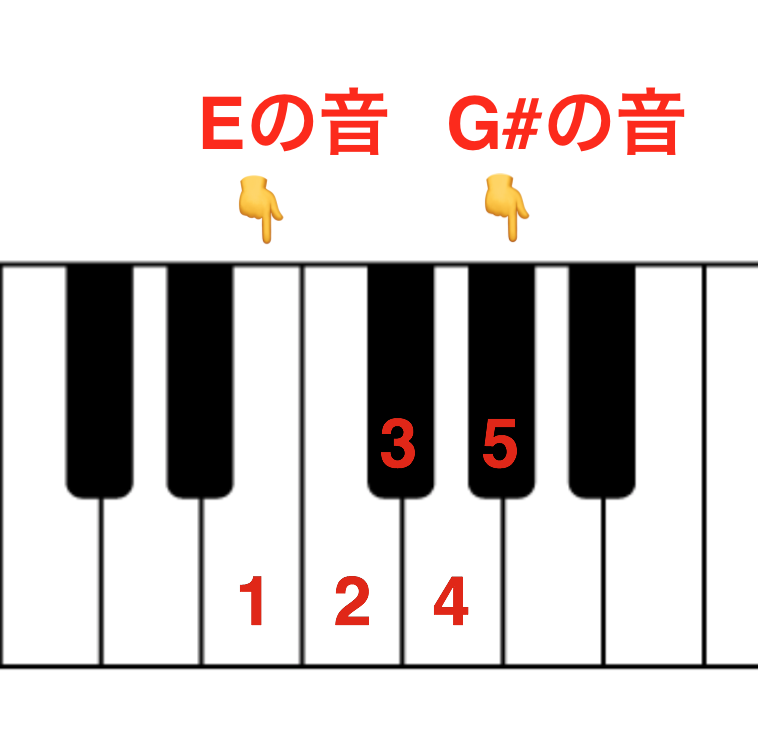
From E, count up another major third—another five keys—to reach G♯. We have now built a C augmented triad: C–E–G♯.
Just as in the previous three lessons, musicians commonly drop the word 'triad' and simply say 'C augmented'.
There are also several common ways to write its chord symbol.
You may see Caug or C(♯5).
Both forms refer to the augmented fifth. It is worth learning each notation, since chord charts differ.
Here is today's summary.
Summary — (1) A C augmented triad is usually called 'C augmented'. (2) It consists of two stacked major thirds: C–E–G♯. (3) Common symbols include Caug and C(♯5).
That completes our introduction to the augmented triad in Lesson 4. In the next lessons we will explore seventh chords.
Seventh chords are built by adding a fourth note to a triad. Make sure you feel confident constructing the basic triads before moving on.