READING MUSIC / LESSON 06
Beams and Note Groupings
In this lesson, we will look at beams: the horizontal or slanted lines that connect groups of eighth notes, sixteenth notes, and other short note values. Beaming helps musicians read rhythms quickly.
Before we examine beams, let’s review which way a note stem should point.
On a five-line staff, stem direction generally depends on the position of the notehead relative to the middle (third) line.
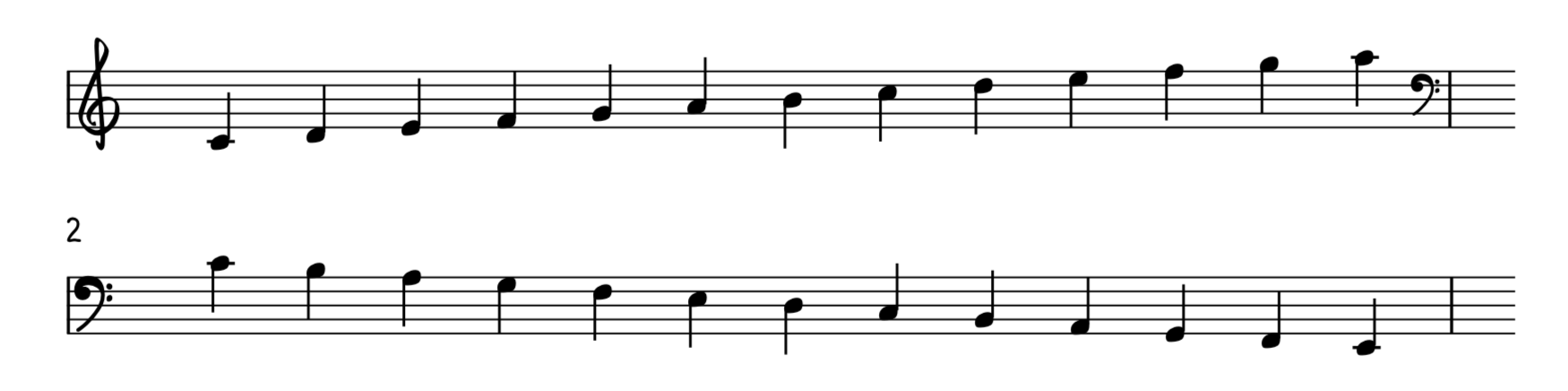
If the notehead is above the middle line, the stem usually points down. If the notehead is below the middle line, the stem usually points up. A note on the middle line can be written either way, depending on the context.
This basic principle applies to many stemmed notes, including half notes and eighth notes. In multiple voices, different conventions may apply.
Now let’s look at beaming. Compare the next two examples.

A series of flagged eighth or sixteenth notes can be difficult to scan at a glance. Beams group those notes visually and make the beat structure clearer.

Notice how much easier the rhythm is to read when the notes are joined by beams.
When writing or reading music, pay attention to how beams group notes within the meter. Good beaming makes rhythmic patterns easier to understand.