READING MUSIC / LESSON 07
Rests and Their Note Values
In this lesson we explore rests. A rest tells the performer how long to remain silent. Just like notes, rests have specific durations, and the relationships between those durations are exactly the same.
If you would like a refresher on note values, review the lesson below.
First, take a look at the main types of rests and where they sit on the staff.
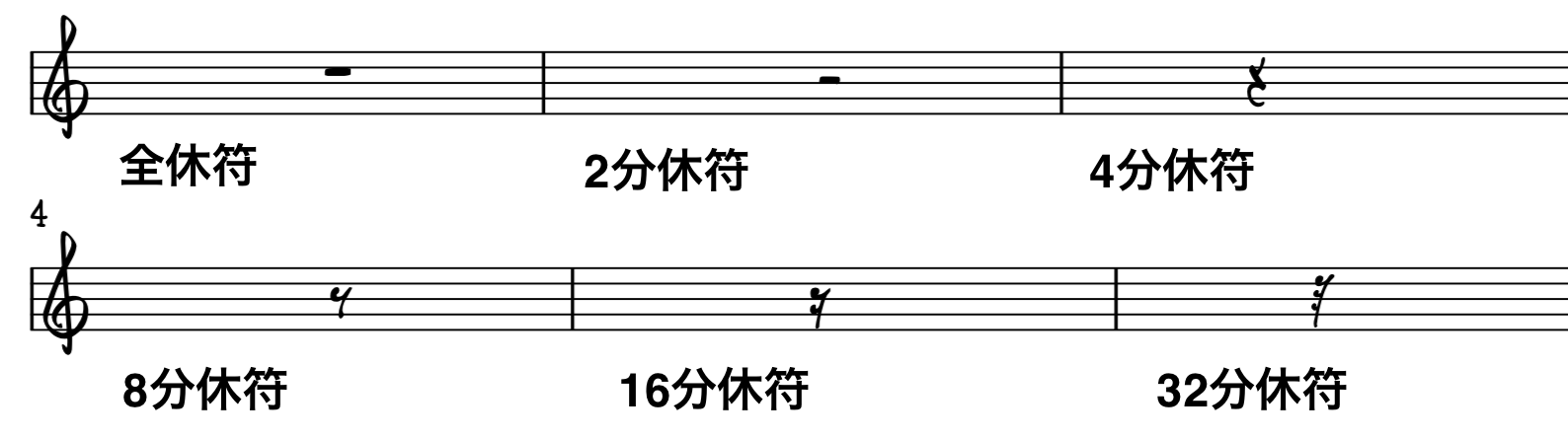
A whole rest corresponds to a whole note; a half rest to a half note; a quarter rest to a quarter note; and an eighth rest to an eighth note. The same relationship continues with shorter note values.
Pay attention to each rest's position on the staff. The placement of a whole rest and a half rest is especially important when reading and writing notation.
Like notes, rests can also have dots added to them.
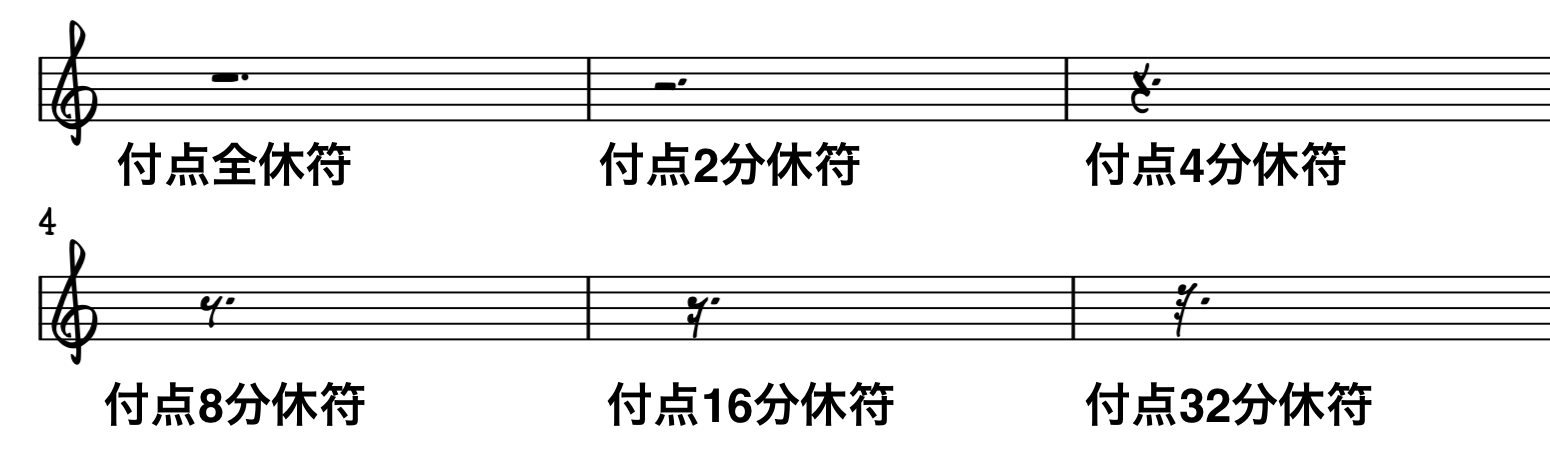
A dotted rest lasts one and a half times its original value, just as a dotted note does. For example, a dotted half rest has the same duration as a dotted half note, and a dotted quarter rest has the same duration as a dotted quarter note.
Key points
1. A rest represents a measured period of silence.
2. Rest values follow the same relationships as note values.
3. Dotted rests work in the same way as dotted notes.