READING MUSIC / LESSON 08
Understanding Time Signatures
A time signature is one of the symbols that makes written music easier to understand. It tells us how musical time is organized into measures. If that sounds unfamiliar, we can break it down step by step.
First, what is a measure (or bar)?

The vertical barlines divide the staff into sections called measures.
A beat is a unit we use to organize musical time. A helpful starting point is to think of one steady handclap as one beat.
A time signature tells us how many units of a certain note value fit into each measure. In simple meters you can think of it as showing how to count the beats in each bar. More complex meters use different beat groupings, but the basic notation works in the same way.
Here are several familiar time signatures.
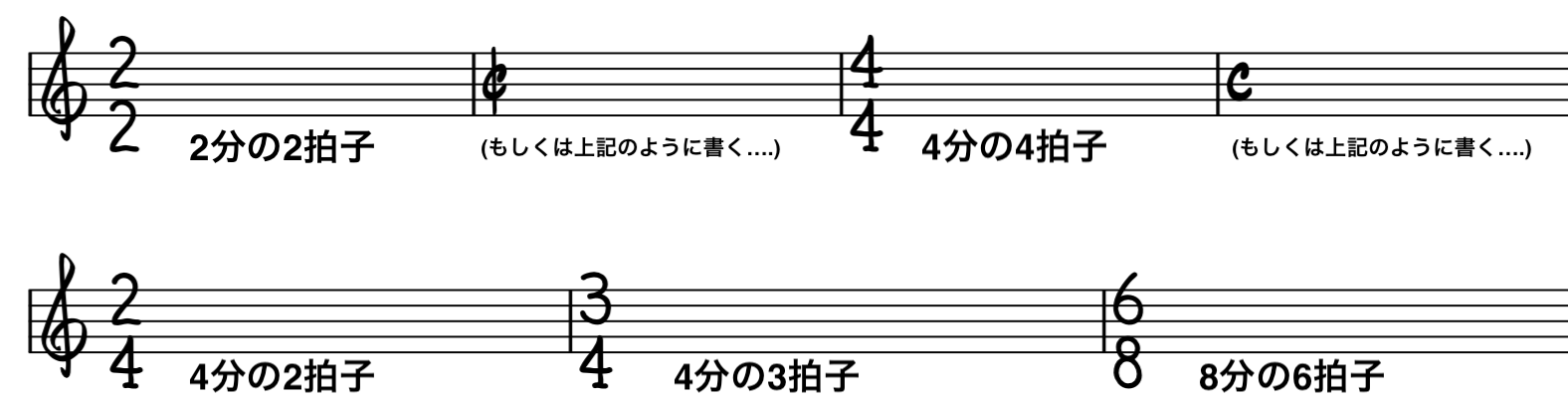
Notice that some meters can be written in two ways (for example, common time can appear as 4/4 or as the C symbol), while others use only the numerical form shown.
A time signature is written as two numbers, one above the other, without a fraction bar. On the staff, the numbers are placed around the middle line.
The lower number identifies the note value used as the counting unit. The upper number states how many of those units fill one measure.
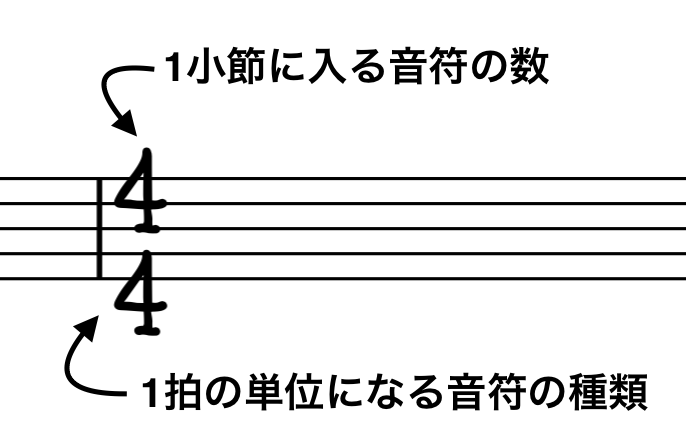
For example, 4/4 means that a measure contains the equivalent duration of four quarter notes. If either number changes, the number or the value of the units changes accordingly.
To read time signatures confidently, it helps to know note values first. Revisit the related lesson whenever you need a refresher.