POP PIANO / LESSON 03
Putting Triad Accompaniment Together with “Let It Be”
This is the final part of our “Let It Be” accompaniment series. In Part 1 we learned a basic accompaniment pattern, and in Part 2 we examined triad inversions. Now we will combine the two.
First, look back at the original score and performance from Part 1. That version is already a valid accompaniment, but it makes the right hand move more than necessary.
Now compare the inversions from Part 2 with the revised score below. The upper staff shows a more efficient arrangement of the same chords.
By keeping neighboring chord tones close together, the right hand has less distance to travel. The top notes, for example, move only from G to G to A to A. This generally produces a more connected sound.
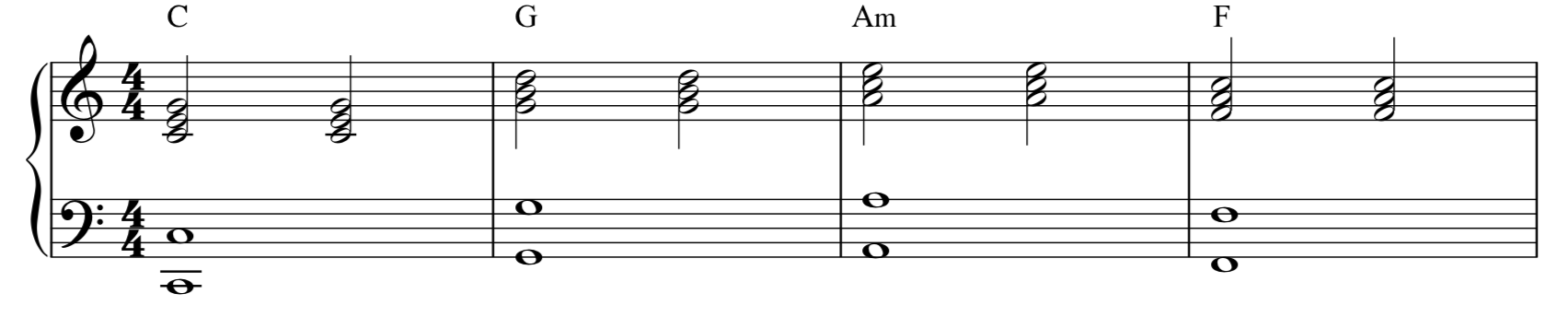
Listen to the second performance example and compare it with the first. Both versions use the same basic harmony, but the second uses more economical voice leading.
Next, add the sung melody above the accompaniment, as demonstrated in the third example. This is a practical first step toward singing while playing the piano.
To summarize: (1) learn the basic accompaniment, even in root position; (2) introduce inversions to connect the chords smoothly; and (3) practice singing while maintaining that accompaniment.

As a bonus, the final video experiments with a different melody over a similar accompaniment pattern: Ayaka’s “I Believe.” It is an interesting reminder that familiar harmonic patterns can support very different songs.

Keep practicing at a comfortable tempo, and gradually develop an accompaniment that supports your singing rather than competing with it.