JAZZ PIANO / LESSON 01
Jazz Piano Intro Patterns, Part 1
One of the first challenges at a jazz jam session is being asked, “Could you give us an intro?” Many students are unsure what to play, and I have felt the same way myself! This series presents ten practical intro patterns. My YouTube demonstration includes both performance and notation.
Across five installments we will discuss details that are difficult to cover in the video. Part 1 focuses on patterns 1 and 2. Study the music below.
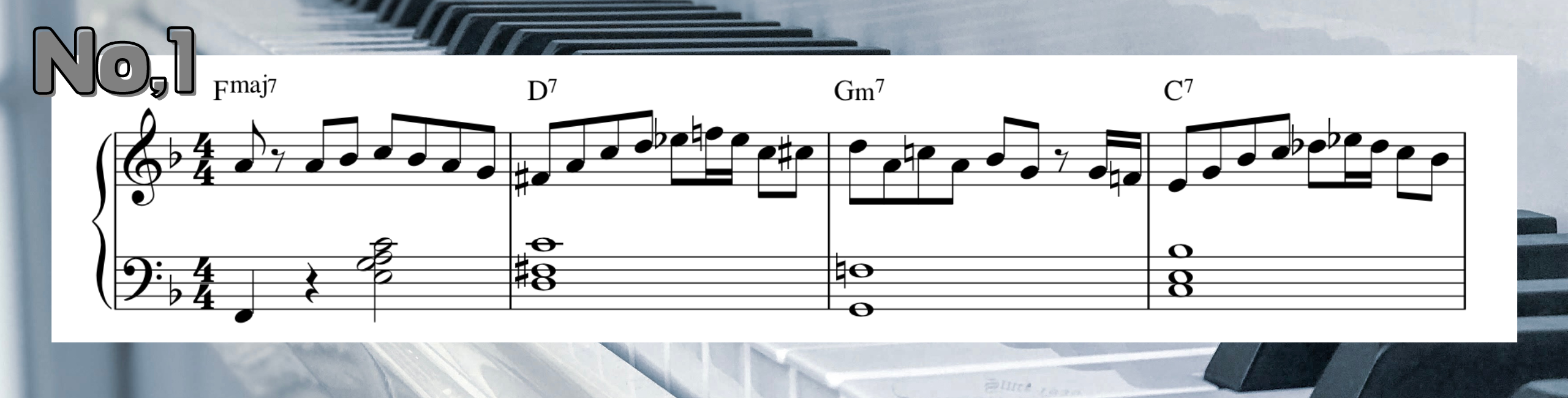
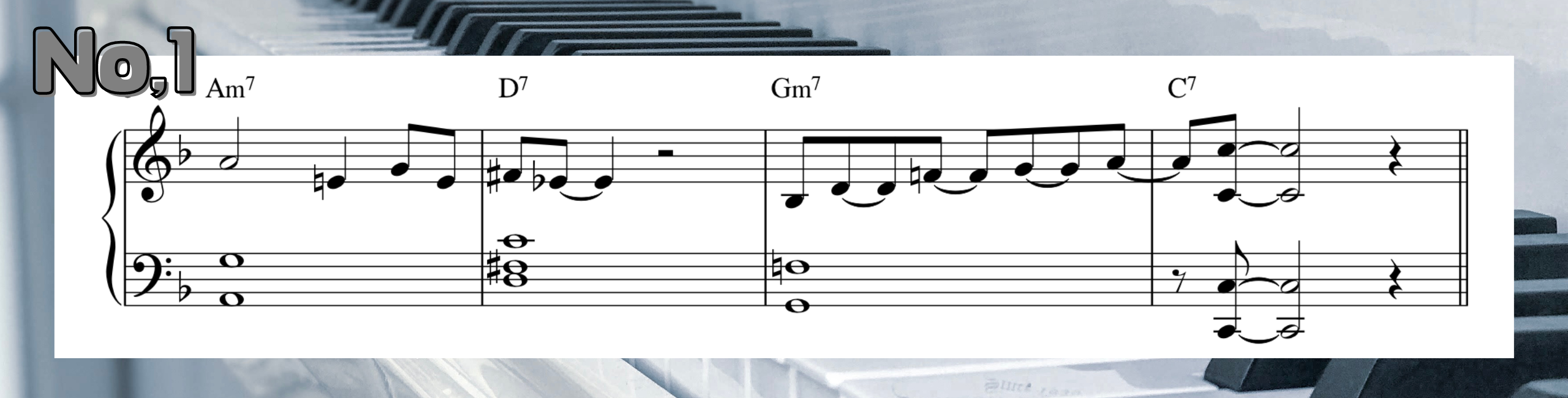
Pattern 1 uses the familiar progression Imaj7–VI7–IIm7–V7–IIIm7–VI7–IIm7–V7. In F major, D7 in bars two and six acts as a secondary dominant leading to Gm7; the other chords are diatonic. Since intros are often played by the pianist alone, rootless left-hand voicings intended for playing with a bassist may not be ideal. I use the root and seventh, sometimes adding the third—an approach commonly called Bud Powell voicing. The central aim of an intro is to lead smoothly into the melody. For a tune beginning on Imaj7, ending on C7 prepares Fmaj7. If the tune begins on a different chord, you can first resolve to Imaj7 and then use the appropriate ii–V to approach the opening harmony.
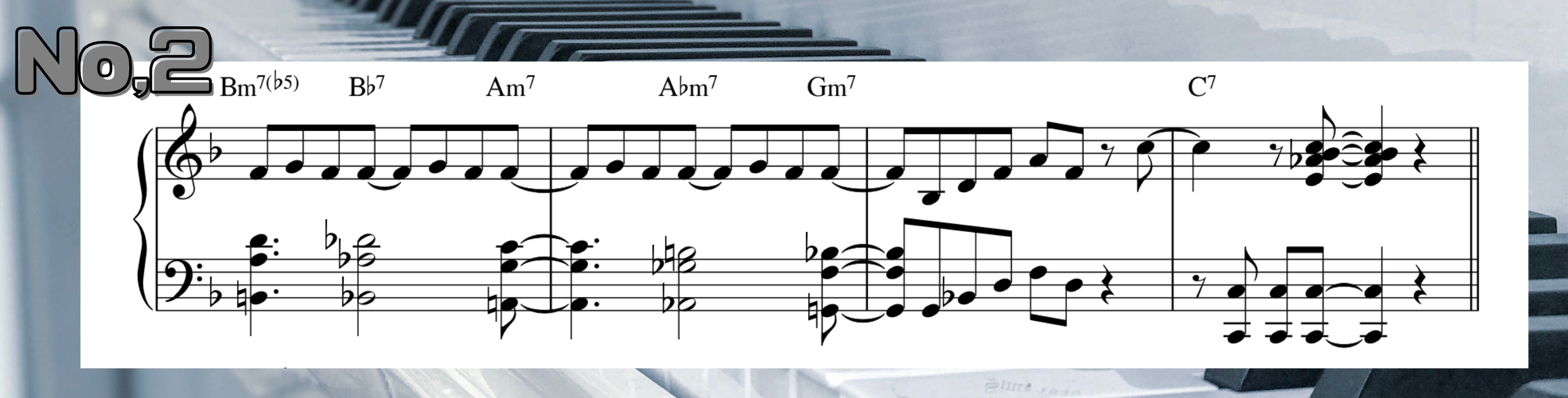
Pattern 2 descends from ♯IVm7♭5 and can work as an outro as well: ♯IVm7♭5–IV7–VIm7–♭VIm7–IIm7–V7. Lengthening the first chords allows you to create an eight-bar intro. As in pattern 1, this example approaches Imaj7. To lead to a different opening chord, first resolve to Imaj7 and then use a ii–V in the destination key.
The next installment examines patterns 3 and 4. Practice the voicings slowly, and listen for the moment when your intro naturally hands over to the melody.