JAZZ PIANO / PHRASE ANALYSIS 02
Bill Evans Minor ii–V–i Phrase Analysis 2
Even over the same Em7♭5 → A7 → Dm progression, rhythmic placement changes the character of a phrase. This study focuses on quarter-note triplets woven together with eighth notes.
The full phrase | Hear the rhythm as well as the notes

A broad quarter-note-triplet pulse is interrupted and enriched by quicker eighth-note movement. Notice the changes in note lengths and the overall sense of breath.
Em7♭5 | The floating feel of triplets
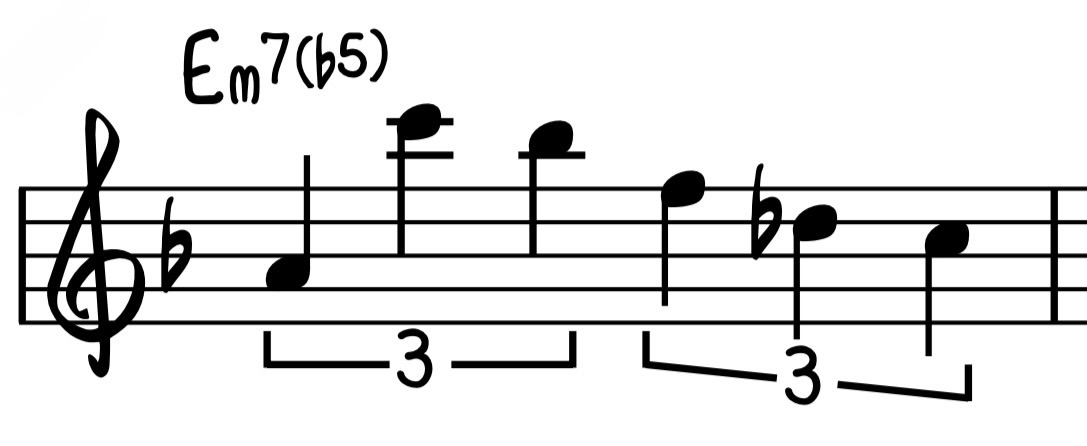
Quarter-note triplets give the line a spacious rhythmic feel. Toward the end, D♭ sounds like a color anticipating the following A7 harmony. Listen to the harmonic connection across the barline.
A7 | HMP5↓ with eighth-note movement
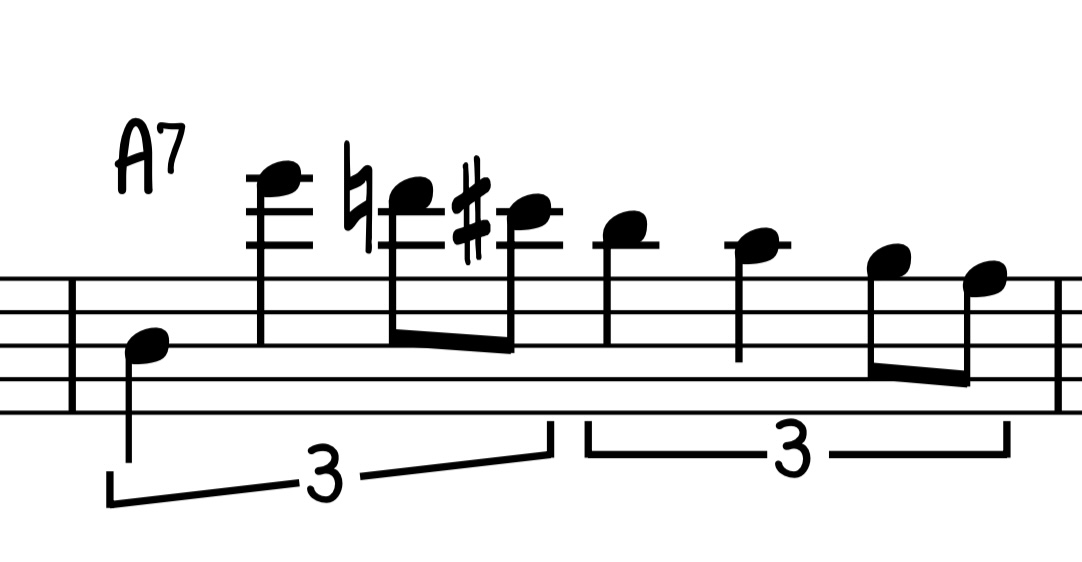
The line draws on Harmonic Minor Perfect 5th Below (HMP5↓), derived from D harmonic minor and also called A Phrygian dominant. Eighth notes are woven into a quarter-note-triplet framework, adding momentum without losing the larger rhythmic shape. Beyond naming the scale, listen to how the rhythm is organized.
Dm | Chord tones and chromatic color
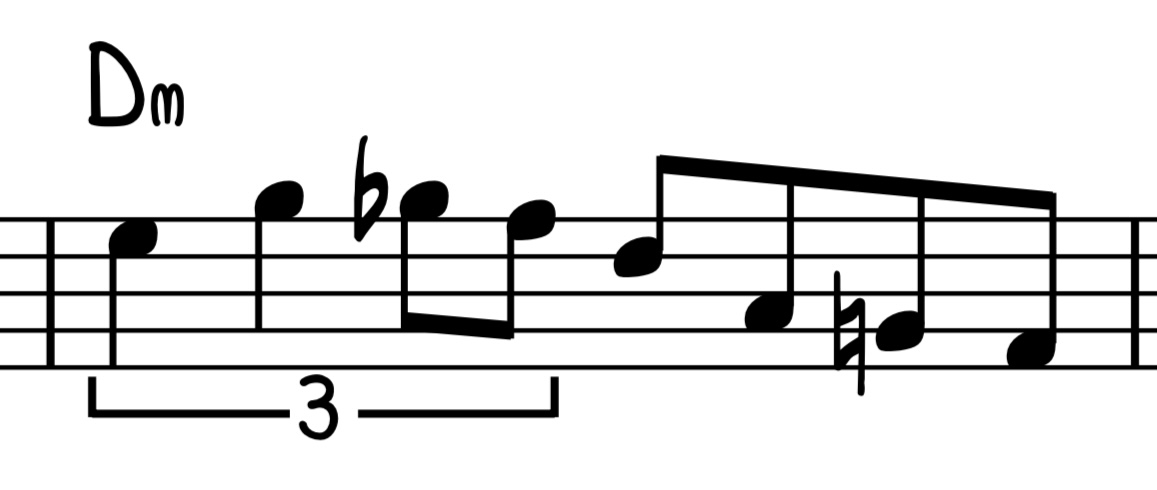
The resolution is mostly built from chord tones, with G♭ adding chromatic approach-note color. The rhythmic idea continues through the first two beats before settling into a clear chord-tone resolution.
The real lesson: rhythmic phrasing
The note choices are relatively economical. The contrast between quarter-note triplets and eighth notes creates a sophisticated sense of motion. Practice not just which notes to play, but how long to feel each gesture.
Practice ideas
- Clap or sing the rhythms before playing the pitches
- Practice the Em7♭5, A7 and Dm segments slowly, paying attention to note values
- On A7, identify the HMP5↓ scale tones and the melodic direction
- Use a metronome or backing harmony to shape the pulse before increasing the tempo
- Transpose the rhythmic concept to another minor ii–V–i and make your own line
Learn with the performance
This phrase is also introduced in an Instagram reel and YouTube video. First listen for the note flow and rhythmic placement, then return to the notation.
Notation images, commentary and social-post text by Seiya Matsushita (Pivo Music School). An educational analysis of a phrase drawn from a Bill Evans performance.