JAZZ PIANO / PHRASE ANALYSIS 03
Bill Evans Minor ii–V–i Phrase Analysis 3
Minor ii–V–i progressions are an essential part of jazz piano improvisation. This Bill Evans phrase over Em7♭5 → A7 → Dm combines distinctive harmonic colors with beautifully shaped rhythm. Listen for the upper-structure triad idea and the recurring quarter-note triplets.
The complete phrase | Hear the larger rhythmic shape

Quarter-note triplets connect all three chords. Rather than simply running up and down a scale, the line introduces characteristic tensions while retaining a natural musical flow.
Em7♭5 | A D major triad as upper-structure color
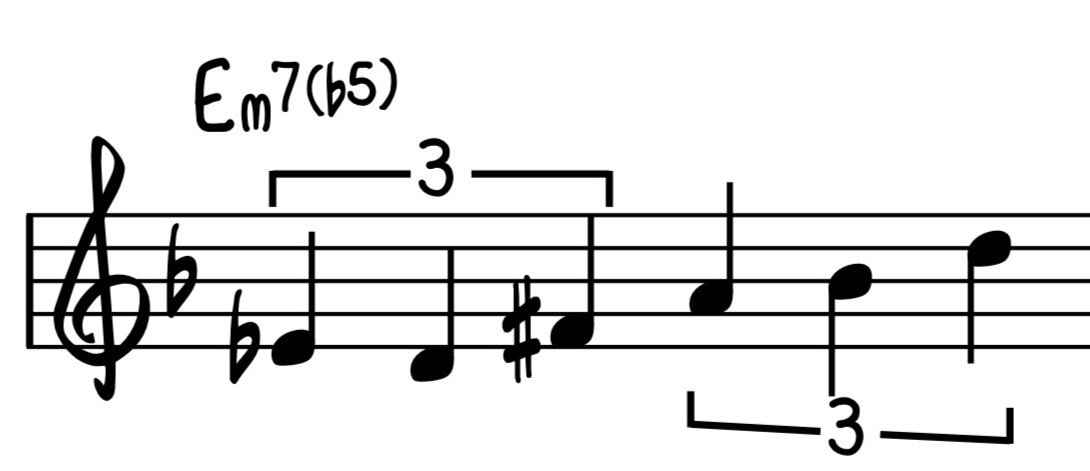
Over Em7♭5, the quarter-note triplet phrasing includes the notes of a D major triad (D–F♯–A). This recalls the upper-structure triad concept often used in jazz piano voicings. Relative to E, these pitches are ♭7, natural 9 and 11. F♯ in particular suggests E Locrian ♯2 instead of ordinary E Locrian, which contains F natural. It is fascinating to hear a voicing concept used as melodic vocabulary. D, the bottom note of this triad, lies a whole step below the root E.
A7 | Natural 13 moving toward altered colors
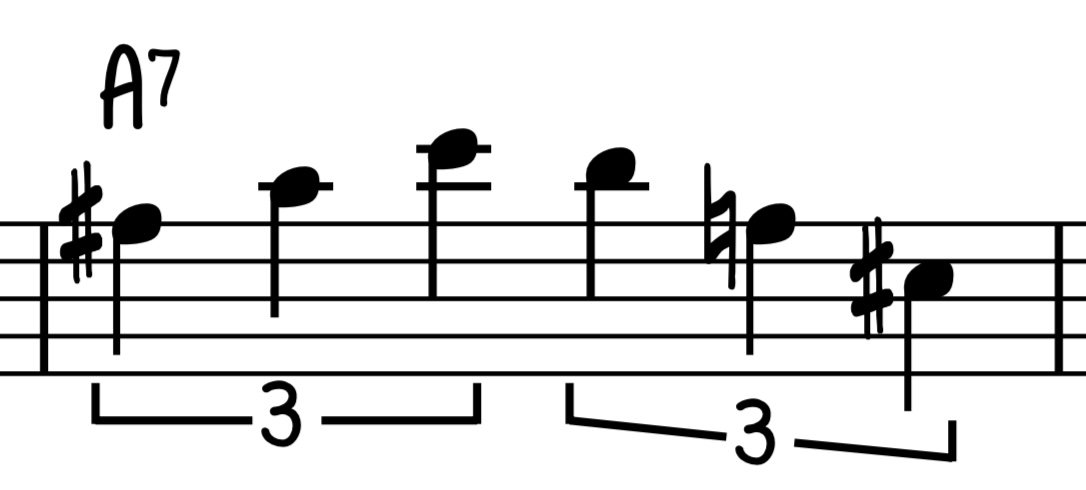
The quarter-note triplets continue over A7. The opening F♯ is the natural 13, carrying over the color heard on Em7♭5. The line then moves through 1 → ♯9 → ♭9 → ♭13 → 3, combining altered tensions with basic chord tones. Rather than using altered notes from the very beginning, Bill gradually increases the harmonic tension. Listen to how this interacts with the rhythmic phrasing.
Dm | Major 7 color and rhythmic variation
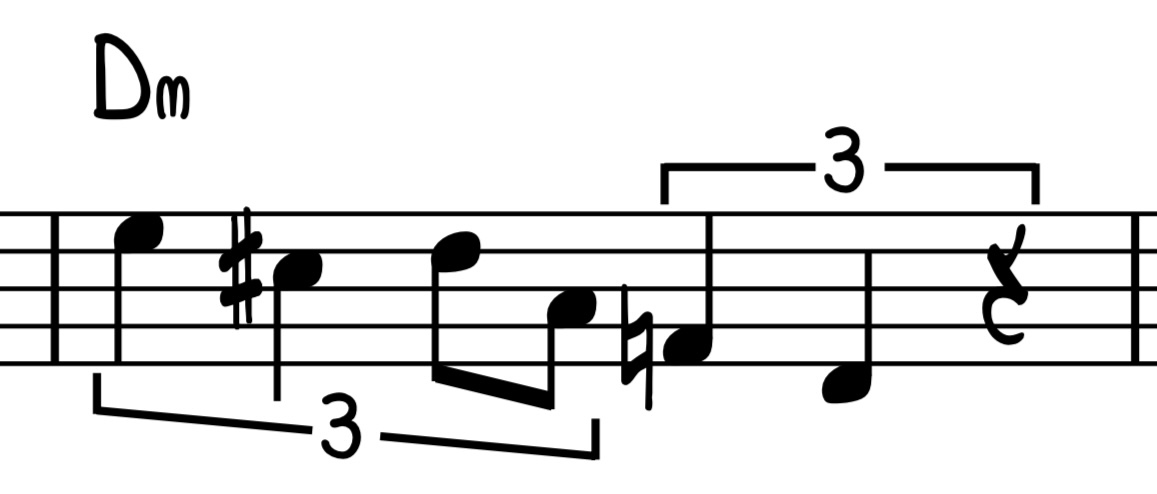
The quarter-note triplet idea continues over Dm, but eighth notes are woven into its opening phrase, adding subtle rhythmic variation. This is an especially refined detail of Bill Evans’s phrasing. The note C♯ provides a major seventh color, suggesting Dm(maj7). C♯ is not a note of the basic D minor triad, but it belongs to the minor-major seventh sonority.
The main idea | One rhythmic framework, changing harmonic colors
Three ideas stand out: using upper-structure triad thinking for single-note improvisation, combining natural and altered tensions, and shaping quarter-note triplets with inserted eighth notes. Do not only memorize the phrase—understand why the notes and rhythms work.
Practice ideas
- Clap and sing the quarter-note triplets before playing the pitches
- Isolate D–F♯–A over Em7♭5 and listen to its color
- On A7, feel the change from F♯ (13th) to the altered notes
- Hear C♯ over D minor and play the eighth-note figures cleanly within the triplet phrasing
- Transpose the ideas to other minor ii–V–i progressions and invent your own lines
Watch the performance | Instagram reel
Listen to the performance, focusing on the quarter-note triplets and the changing harmonic colors.
Notation images and analysis by Seiya Matsushita (Pivo Music School), studying a phrase from a Bill Evans performance.