CHORD THEORY / LESSON 06
The Minor Seventh Chord
We now continue with four-note chords. In the previous lesson, a dominant seventh chord was built on a major triad. This time the basic triad is minor. The added note remains a minor third above the fifth, but the change in the triad affects both the sound and the chord name.
Review the minor triad first if you are unsure of its structure. A C minor triad contains C–E♭–G.
The notation shows a C minor seventh chord, commonly written Cm7. Its four notes are C–E♭–G–B♭.
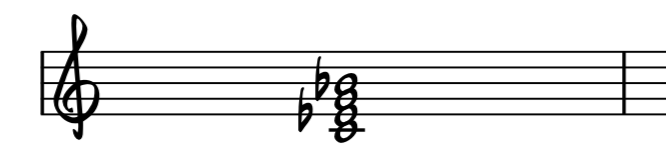
Notice the bottom three notes: they form a C minor triad. Adding one more note creates the seventh chord.
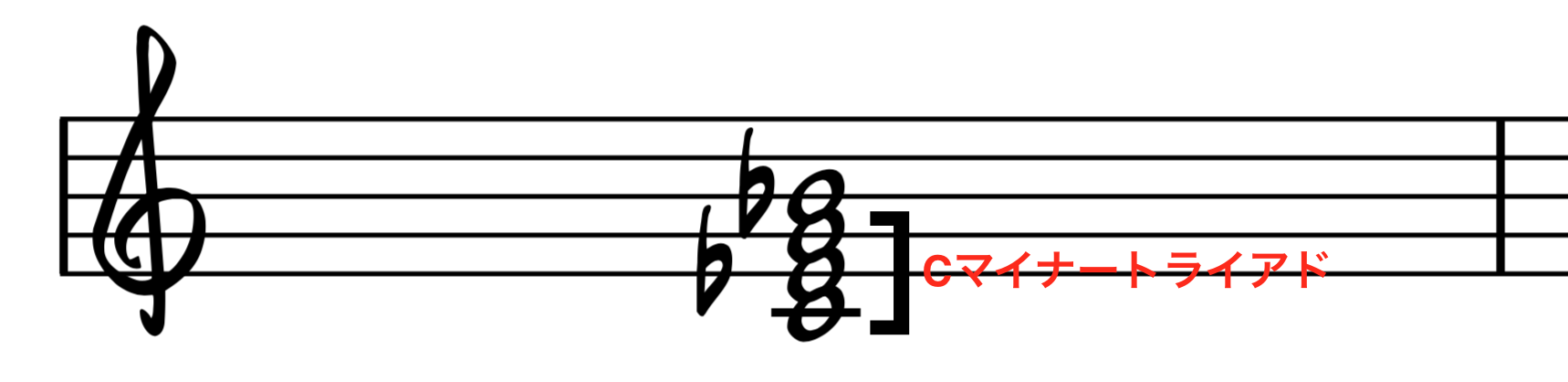
From G, the top note of the root-position triad, move up a minor third. Counting four keys including G and B♭ brings you to B♭.
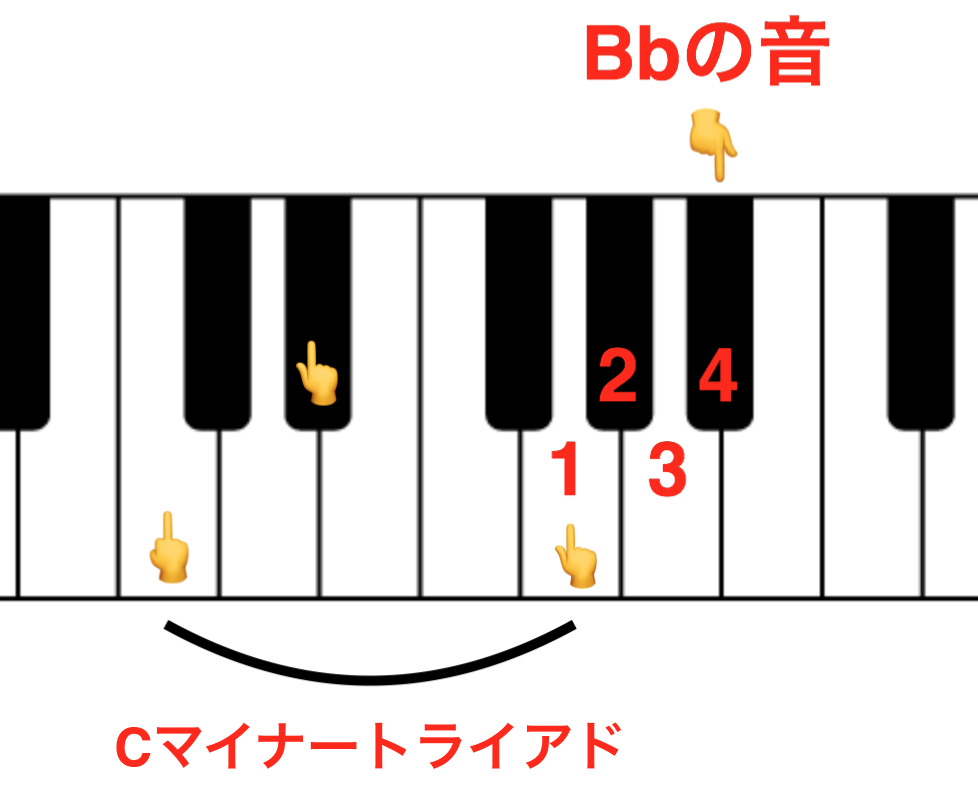
Play all four notes together: C–E♭–G–B♭. You now have a C minor seventh chord. You can apply this same interval structure from other roots.
In everyday conversation, musicians tend to say 'C minor seven' rather than 'C minor seventh chord'. The word 'chord' is usually omitted.
Summary: (1) A minor seventh chord is a four-note chord built on a minor triad. (2) Add a minor third above the triad's fifth. (3) C–E♭–G–B♭ is Cm7; musicians normally shorten its spoken name to 'C minor seven'.