JAZZ PIANO / MINOR II–V–I · 05
Bill Evans Minor ii–V–i Lick Analysis 5 | Beautiful Love Finale
The final installment of our five-part analysis of Bill Evans Trio’s “Beautiful Love” from Explorations (1961). This phrase highlights a D major upper-structure triad over Em7(♭5) and a simple resolution.
Watch the performance | Instagram Reel
Listen along with the notation to hear the rhythmic shape and voice leading.
Full phrase

Em7(♭5) | Using a D major upper-structure triad
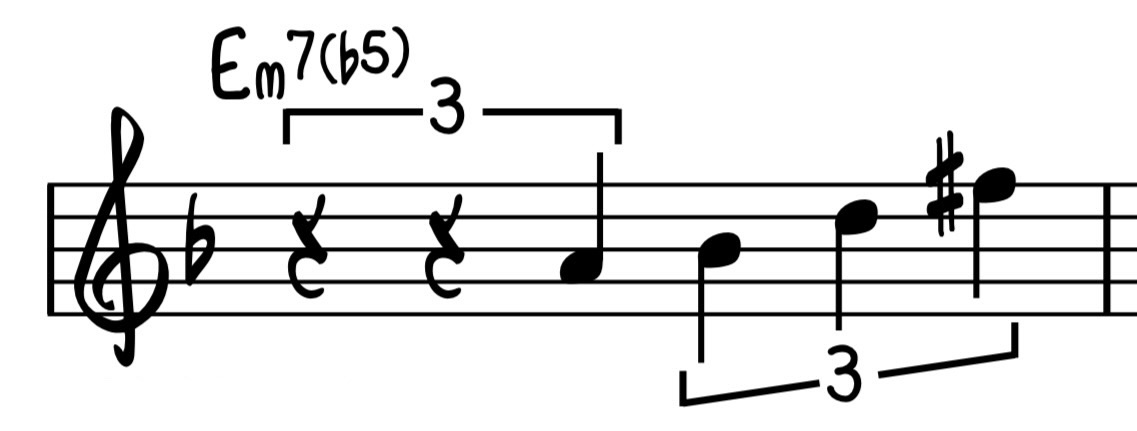
The phrase begins on A on the third note of a quarter-note triplet, then moves through B♭, D and F♯. Excluding B♭, A–D–F♯ are notes of a D major triad. Over Em7(♭5), D is ♭7, F♯ is 9 and A is 11. A major triad built on ♭7 creates a colorful upper structure, related to the Locrian ♯2 sound. B♭ is the chord’s diminished fifth.
A7 | Root and flat ninth
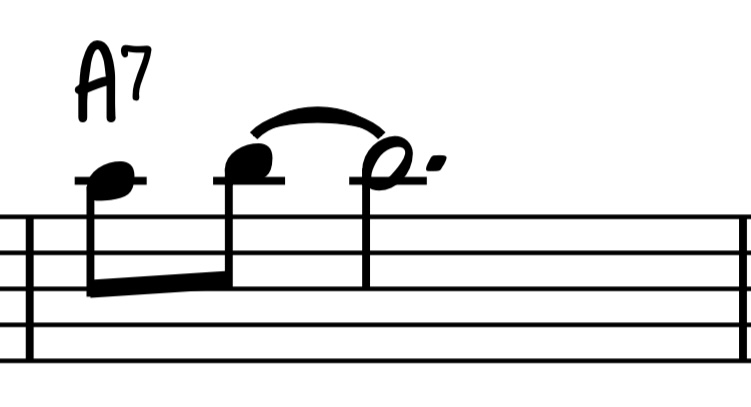
A (root) and B♭ (♭9) provide a concise dominant sound. The sparse material contrasts with the previous bar and creates tension leading into D minor.
Dm | Descending chord-tone resolution
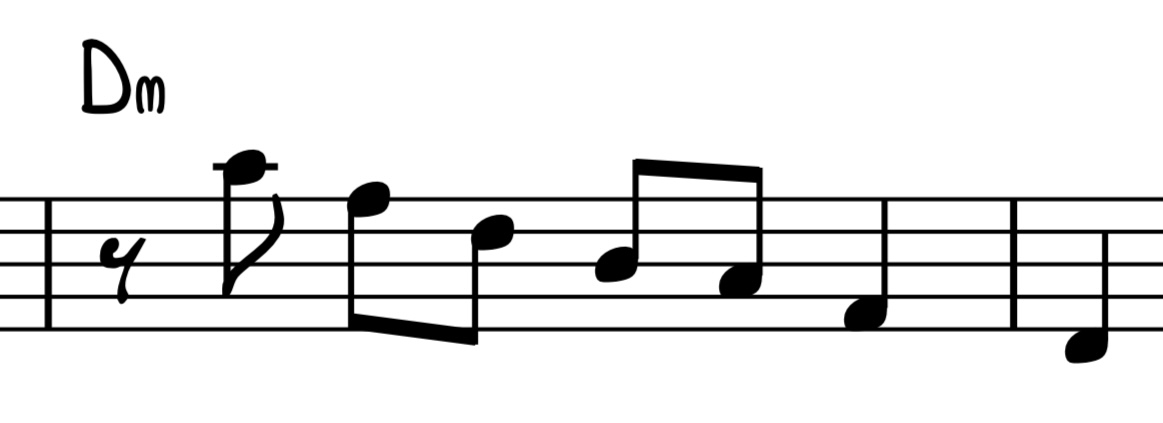
The descending line relies mostly on D, F and A, the chord tones of D minor. B♭ can be heard as a passing note from the D natural minor scale.
Key takeaway
Em7(♭5) brings upper-structure color, A7 reduces the material to root and ♭9, and Dm resolves through a mostly chord-tone descent. The contrast between color and simplicity shapes the phrase.
Beautiful Love | Complete five-part series
Compare all five transcribed phrases from the same Bill Evans Trio recording.
Online jazz piano lessons
Learn how to apply these harmonic and rhythmic ideas in your own improvisation through private lessons.