Can You Learn Jazz Piano on Your Own? A Beginner Roadmap
Five practical steps from major scales to Autumn Leaves, voicings, and improvisation.
Wondering where to begin with jazz piano? This roadmap follows the sequence used in lessons at Pivo Music School, with original notation examples. Try it independently, and ask about a free trial lesson if you need guidance.
Explore the free trial lesson →STEP 1|Learn major scales
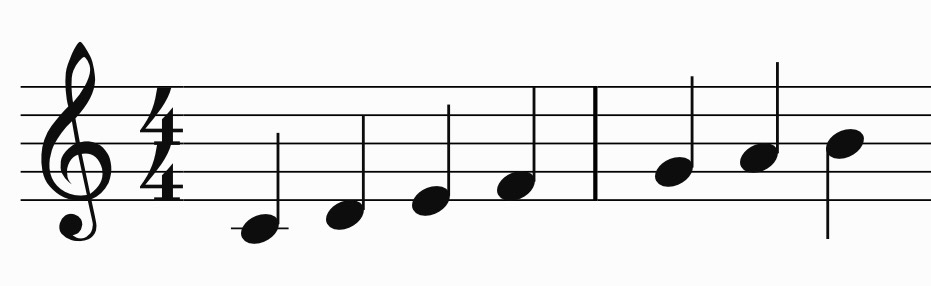
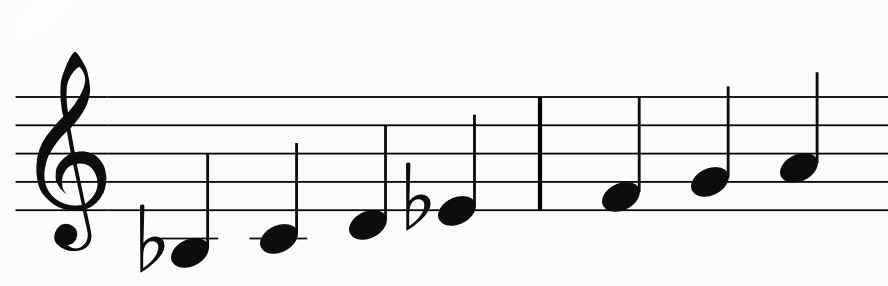
Begin with C major, then move to B-flat major. The major-scale formula is whole–whole–half–whole–whole–whole–half. Practice each hand separately, then together. Your long-term goal is all 12 keys.
STEP 2|Understand diatonic seventh chords
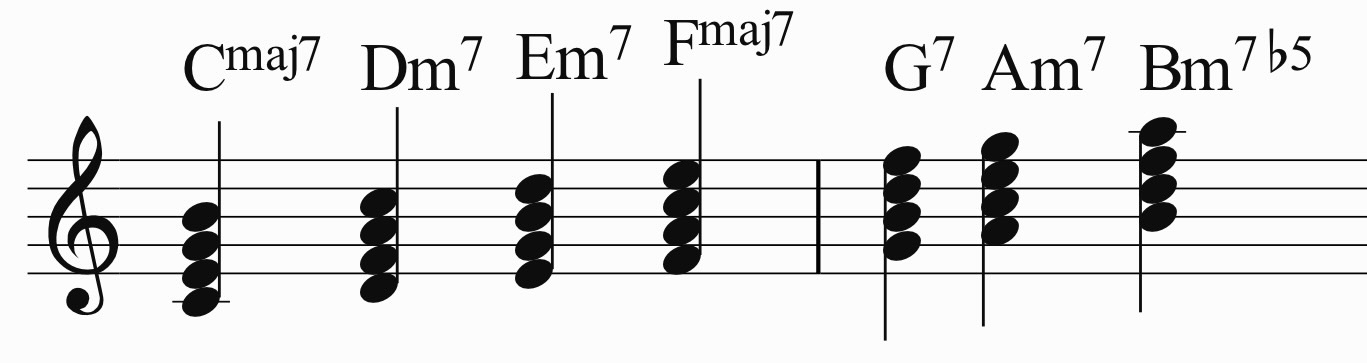
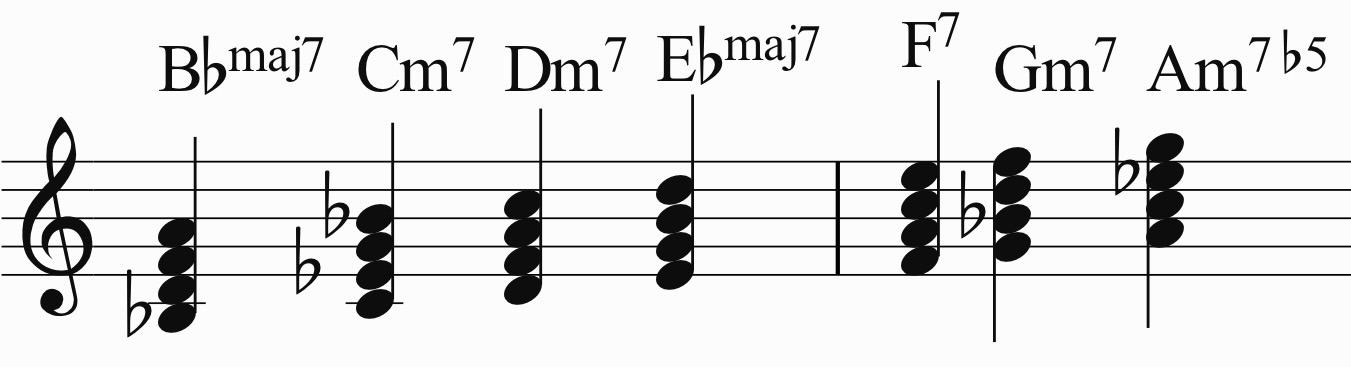
Stack four notes in thirds using the notes of a major scale to create diatonic seventh chords. Start with root-position chords, without inversions, in C major and B-flat major.
STEP 3|Play Autumn Leaves with both hands
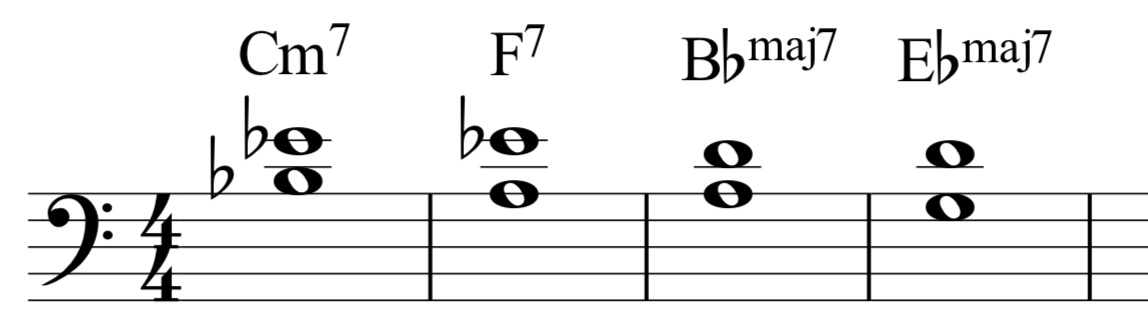
Use Autumn Leaves as your first tune. Learn the melody in your right hand and the chords in your left, then combine them. Cm7 → F7 → B♭maj7 → E♭maj7 is ii–V–I–IV in B-flat major. Use properly licensed sheet music for the original melody.
STEP 4|Develop left-hand voicings
Start with the third and seventh of each chord: E♭ and B♭ over Cm7, A and E♭ over F7, and D and A over B♭maj7. Listen to common tones and semitone motion, then add tensions such as ninths and thirteenths.
STEP 5|Start improvising with chord tones
Play the 1st, 3rd, 5th, and 7th of each chord in eighth notes, ascending and descending through the Autumn Leaves progression. Also practice each chord in isolation. Later, vary the rhythm and explore modes and the three minor-scale forms.

Further options: Am7♭5 — A Locrian; D7 — D harmonic minor perfect fifth below; Gm6 — G melodic minor; E♭7 — E♭ Lydian dominant. These are context-dependent options, not prerequisites for beginners.
A 30-minute practice routine
Scales: 5 min; diatonic chords: 5 min; Autumn Leaves melody and accompaniment: 10 min; voicings or chord tones: 10 min. Adjust to your level.